Needle-free hair restoration
Does Alma TED work for thinning hair?
A calm, honest answer to the question I hear most about needle-free hair restoration, and how to tell whether it is right for you.
By Whitney Kammerich
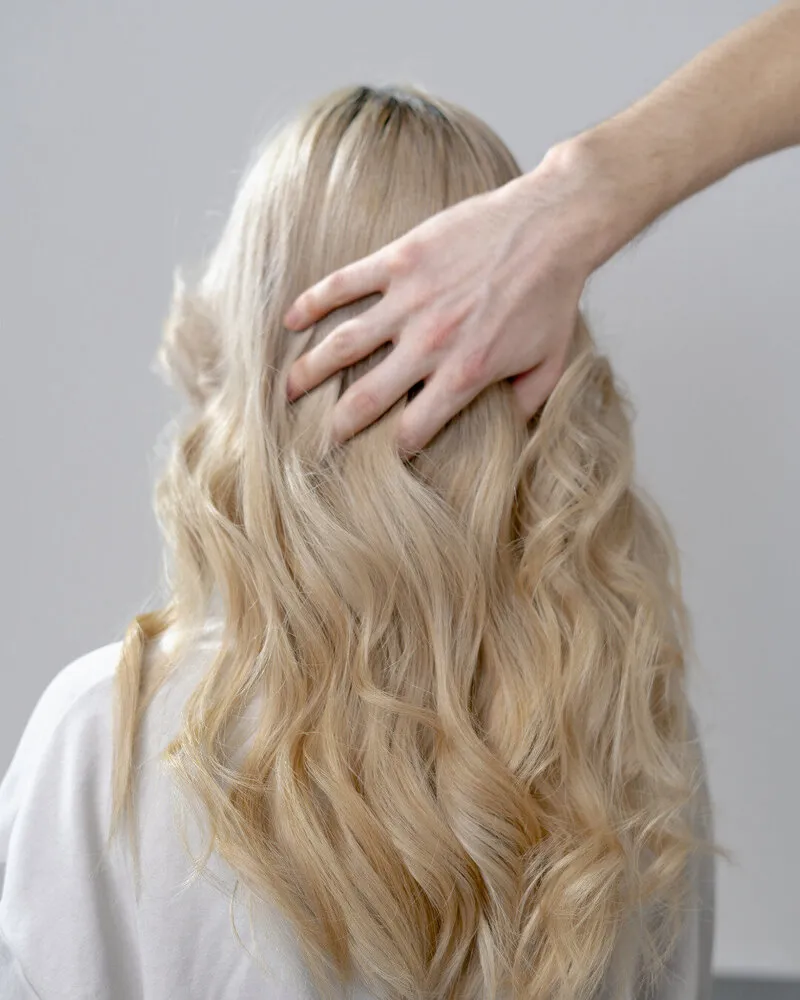
If your part looks wider than it used to, or your ponytail feels thinner in your hand, you are not imagining it, and you are not alone. It is one of the most personal things a guest brings to my chair, often quietly, often after months of watching. So when someone asks me whether Alma TED really works, I want to answer the way I would want to be answered: honestly, without a sales pitch.
Alma TED, short for TransEpidermal Delivery, is a needle-free scalp treatment. It pairs gentle ultrasonic energy with light air pressure to carry a nourishing formula through the surface of the scalp, toward the follicle. There are no needles, no injections, and no downtime. The aim is a healthier scalp and the right conditions for thicker, fuller, healthier-looking hair from the root.
What the research actually says
In Alma’s clinical study of fifty participants, ninety-eight percent saw reduced shedding, eighty-nine percent saw a visible improvement in density, and every participant reported being satisfied with their results. Those are encouraging numbers, and they are the manufacturer’s own study, so I hold them gently. What they tell me is that for the right person, the treatment tends to move things in the right direction. What they cannot tell me is how your hair will respond, because that depends on the cause and the stage of your thinning.
That is the honest center of it. Alma TED is not a miracle, and I will never promise you one. It is a real, evidence-backed option that works best when we understand why your hair is changing first.
What to expect, and how it feels
A session is comfortable. Plan about forty-five minutes for the visit, with the treatment itself around twenty to thirty. Most people find it relaxing, and you can go straight back to your day afterward. Shedding often eases first, within the first few weeks. Fuller, healthier-looking hair usually develops over three to six months as the follicle and scalp respond, which is why it is offered as a course of three treatments spaced about a month apart.
How it compares to PRP
People often ask me about PRP, since both aim to support thinning hair. The simplest difference is that Alma TED is needle-free and draws no blood. It uses ultrasonic energy and air pressure to deliver its formula through the scalp, with no injections and no recovery time. For guests who want to avoid needles, that distinction is usually the whole conversation.
Is it right for you?
Alma TED tends to suit someone who is noticing more shedding, a scalp that needs support, or hair that simply does not feel as full as it once did, and who wants to do something about it without surgery or needles. Whether it is the right next step for you is exactly the kind of thing we work out together, calmly, at a consultation, where I look at your hair and your history before either of us commits to a plan.
If that sounds like where you are, you can read the full treatment details on the hair restoration page, or simply book a consultation and we will map it out side by side.
Considering Hair Restoration?
Alma TED® needle-free hair restoration by Whitney at Gilded Locks in Grapevine, TX. Non-surgical scalp treatment for thicker, fuller hair, no pain or downtime.